Industrial design protection is a process in which individuals and organizations submit their industrial design applications to the Intellectual Property Office for exclusive rights. When granted, the owner gains credibility, competitive advantage, and a legal basis to prevent and address infringements. However, the registration process can be disrupted, delayed, or denied if the application does not meet legal standards. Below are some common errors and tips to help streamline the registration process.
Photographs and drawings are essential documents in an industrial design registration application. Many applications are denied due to errors in these documents, such as:
- Mixing drawings with photographs.
- Missing required photographs/drawings from one or more specified angles.
- Photographs with glare, reflections, or inconsistent lighting.
- Blurred, broken, or missing lines in photographs/drawings.
- Inconsistent scales and unordered presentation of photographs/drawings.
Examples:
- A cup's photograph is missing an angle from below.
- A chair's drawing has blurred details in the legs.
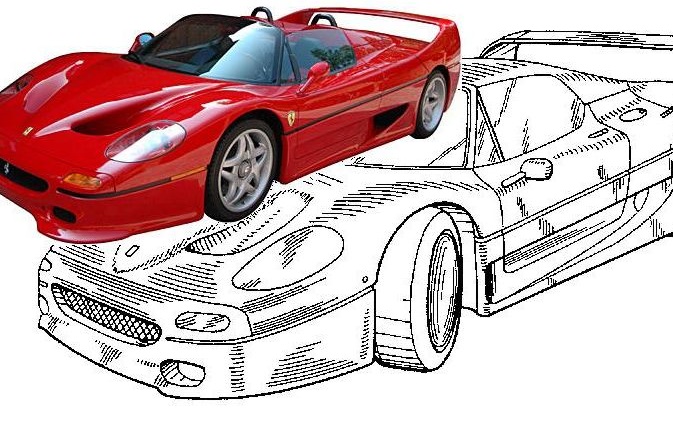
Tips:
- Photographs: Ensure a fixed position and distance between the camera and object, adjust focus to clearly show all external details, and avoid focusing on a single point (no background blurring).
- Drawings: Consistently depict all external details and maintain size ratios across different angles.
According to Article 4, Clause 13 of the Intellectual Property Law, industrial design refers to the external appearance of a product expressed by lines, shapes, colors, or a combination of these elements. A product is defined as an object, tool, equipment, means, or part used to assemble or form such products, manufactured industrially or by handicraft, with clear structure and function, and independently circulated.
Examples:
- Non-detachable parts of a product (e.g., decorative patterns on a product's surface).
- Symbols or screen interfaces not considered independent products.

Tips:
- Only complete products and detachable parts that can circulate independently qualify for industrial design registration.
- Decorative patterns directly on a product’s surface that cannot be separated are not considered independent products and thus are not protected under industrial design.
- Symbols or screen interfaces are not considered independent products and are not protected under industrial design law in Vietnam.
Solutions:
- Register the industrial design for the external shape of the product that includes the decoration/symbol.
- Register the design as a trademark containing the pattern/symbol that can be affixed to specific products.
- Register the pattern/symbol as a copyright.
Novelty is a key condition for industrial design protection. An industrial design is considered novel if it significantly differs from designs publicly disclosed before the application or priority date.
Examples:
- The design is identical or not significantly different from existing designs.
- The applicant’s own design was disclosed prior to the application.
Solutions:
- Conduct a prior search before submitting the industrial design application. This search can be done independently or through an industrial property representative organization.
- Plan to register the industrial design before advertising, marketing, or selling the product.
- Carefully review the information of the industrial design applications filed abroad to claim priority rights properly.
Registering industrial designs establishes ownership rights and prevents infringements. To ensure a smooth registration process and avoid denial, applicants should pay attention to the quality of photographs and drawings, the eligibility of the object, and the novelty of the industrial design.
If you encounter difficulties in registering an industrial design, do not hesitate to contact A Dong IP for consultation